


The difference between Manual gate valves and other types of valves (such as Ball valves, butterfly valves, Globe valves, etc.) mainly lies in the following aspects:
Structural principle
Manual Gate valve: The gate of the gate valve moves in a straight line inside the valve body, and the valve is closed and opened by the fit between the gate and the valve seat, thereby cutting off the flow of the medium.
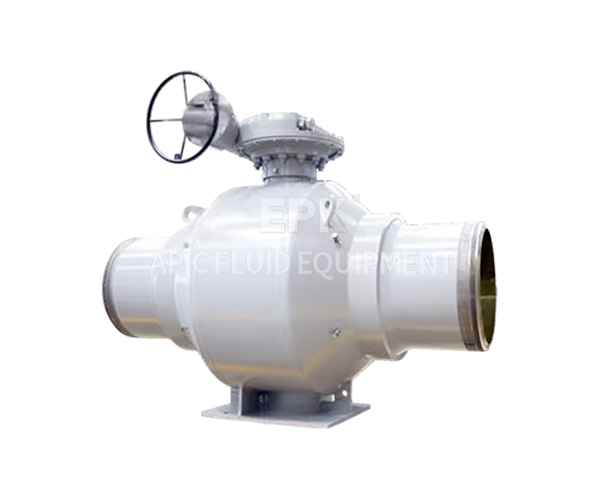
Ball valve: The ball of a ball valve has a circular through-hole. By rotating the ball, the through-hole on the ball is aligned or perpendicular to the pipeline axis to achieve the opening and closing of the valve and control the flow of the medium.
Butterfly valve: Butterfly valves achieve valve opening and closing control by rotating a circular butterfly plate. The butterfly plate rotates around the axis inside the valve body. When the plane of the butterfly plate is parallel to the pipeline axis, the valve opens; When the butterfly plate plane is perpendicular to the pipeline axis, the valve closes.
Globe valve: The valve disc of the globe valve moves up and down along the centerline of the valve seat, relying on the tight fit between the valve disc and the valve seat to cut off the medium. When the valve disc is opened, the medium flows in from below the valve disc and flows out from above.
Sealing performance
Manual gate valve: It has good sealing performance. In the fully open state, the sealing surface between the gate and the valve seat can achieve good sealing effect. However, after long-term use, the sealing surface may be affected by wear and tear, which may affect the sealing performance.
Ball valve: Excellent sealing performance, the sealing between the ball and the valve seat is a tight fit between metal and metal or metal and non-metal. As long as the surface quality and accuracy of the ball and valve seat are guaranteed, the ball valve can achieve good sealing in the closed state, effectively preventing medium leakage.
Butterfly valve: The sealing performance is relatively poor. Due to the gap between the butterfly plate and the valve seat, special sealing structures or materials may be required to improve the sealing performance in some situations where high sealing requirements are needed.
Globe valve: It has good sealing performance, with a small sealing surface between the valve disc and the valve seat, making it easy to achieve tight sealing, especially suitable for occasions with strict leakage requirements.
Opening and closing torque
Manual gate valve: The opening and closing torque is relatively large because when the gate moves inside the valve body, it needs to overcome significant friction and medium pressure, especially in large-diameter valves, manual operation may be more laborious.
Ball valve: The opening and closing torque is small, and the rotational motion of the ball is flexible, requiring only a small amount of friction to overcome. It is easy to operate and suitable for frequent operations.
Butterfly valve: The opening and closing torque is also small, and the diameter of the rotating shaft of the butterfly plate is small. The required torque for rotation is not large, and the operating mechanism of the butterfly valve is usually simple, making it easy to operate manually.
Globe valve: The opening torque is relatively large, while the closing torque is relatively small. When opening, it is necessary to overcome the pressure of the medium to lift the valve disc, while when closing, simply lower the valve disc and rely on the pressure of the medium and the weight of the valve disc to achieve closure.
Applicable media and working conditions
Manual gate valve: suitable for various media such as clean water, sewage, steam, oil products, etc., especially suitable for large-diameter and low-pressure pipeline systems, commonly used in situations where flow requirements are high and do not require frequent flow adjustment.
Ball valve: Suitable for various cleaning media and media with certain impurities, such as natural gas, petroleum, water, etc. It can be used for high-pressure, large-diameter pipelines and is also suitable for situations that require quick opening and closing, such as emergency shutdown systems.
Butterfly valve: suitable for large-diameter and low-pressure pipeline systems, commonly used in ventilation, air conditioning, water supply and drainage systems, etc. It also has good adaptability to media containing impurities such as particles and fibers, but is not suitable for high-pressure and high viscosity media.
Globe valve: suitable for cleaning media such as steam, water, oil, etc., commonly used in small-diameter pipelines where flow regulation is required, such as throttling and pressure reduction in pipelines.
Installation space and requirements
Manual gate valve: The installation space requirement is relatively large because the structure of the gate valve is relatively long, and sufficient straight pipeline length needs to be reserved to ensure the normal installation and operation of the valve.
Ball valve: The installation space is relatively small, the structure of the ball valve is compact, the length is short, and the requirements for installation space are not high. It is more suitable in some situations where space is limited.
Butterfly valve: The installation space is small, and the external dimensions of the butterfly valve are relatively small, especially its height is relatively low. It is suitable for installation in narrow spaces, such as bends in pipelines or near the inlet and outlet of equipment.
Globe valve: The installation space requirements are similar to gate valves. Due to the longer stem of the globe valve, a certain amount of space needs to be reserved above the valve to facilitate the lifting of the stem and the installation of the operating mechanism.
This website uses cookies to ensure you get the best experience on our website.

Comment
(0)